
The Only Option
The world we see is the consciousness we carry. Here's a beautiful thought experiment...
Imagine that tonight you go to sleep in your own bed. (Shouldn’t be too hard to imagine for any moral being, I reckon. Just kidding.) Everything is in its place, everything as usual. But when you wake up, you discover that you are no longer in your bedroom but in a completely different place. Another world, even.
You have a new body. Your bed has a different shape. The colours are wrong, the forms unfamiliar. You try to leave but the doors won't open. Jumping in frustration, like a child, you see the door swing open and realise it unlocks after three jumps.
Outside, your panic only grows. Hundreds of beings walk past. Some are silent, others make sounds that seem to form a language. They are dressed in a manner you have never seen before. In fact, forget about “dressed in a manner”, their mannerisms too are completely out of sync. You can't make heads or tails of it.
The sounds of this world are nothing like those on Earth. The colors lack harmony. The animals are unrecognisable. Two questions grip you: How do I get back? and How does this crazy world work?
We wonder, we feel lost.
But here is the thing. We don't need an alien world to feel lost. We were born into one.
When we arrived, the world was already running. Days had twenty-four hours, weeks had seven of them, and so on. Nobody consulted you. You simply woke up here, and the game was already in motion.
As children we wondered and yet, somewhere along the way, we stopped wondering. We stopped asking how this world works, not at the level of technology, but at the level of what it means to be conscious in the middle of all this. We accepted our confusion as normal. We called it "just the way things are." We fell asleep again.
I’ve paraphrased the aforesaid thought experiment and wisdom therein from Danilo Drumond's The Great Book of Philosophy, because it captures something essential. That feeling of bewilderment, of standing in a world you did not design.
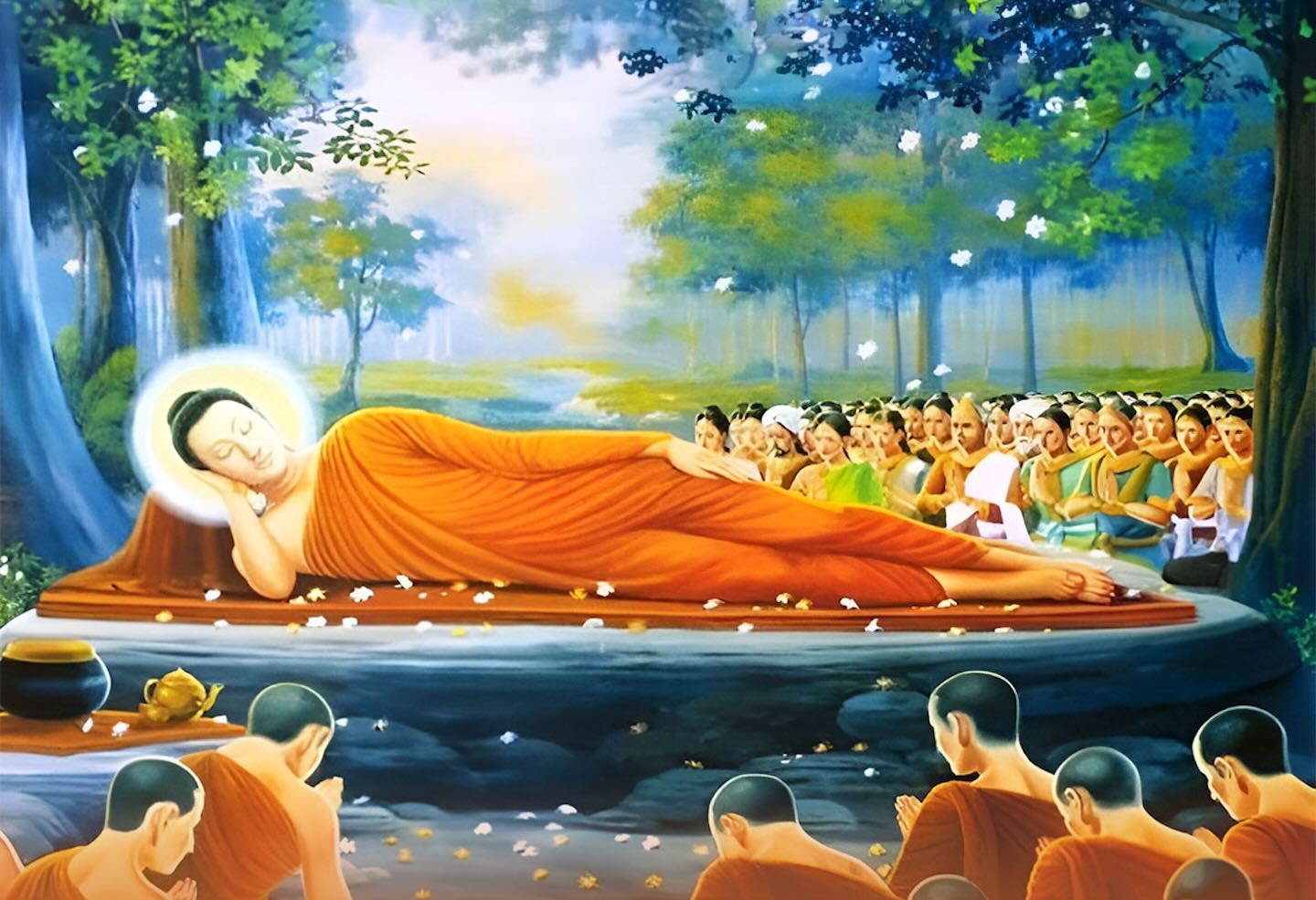
May I add that this was the crux of Buddha’s first impromptu sermon too when he was stopped by a couple of curious onlookers who asked him the secret of his radiance and serenity, and why they didn’t possess it. To that Buddha had replied that the difference between them and him was that they were sleeping and he was awake.
Not surprisingly, several thousand years prior to Buddha’s appearance, Krishna, too, had said that a yogi was someone who could stay awake when the whole world slept.
This absence of insight is what the Vedic texts called avidya. Most interestingly, avidya is not ignorance in the sense of lacking information, but a fundamental misperception of reality. A fog that makes us confuse the passing for the permanent, the surface for the depth, the restless mind for the self.
If I may put it this way, avidya is not the absence of knowledge but the presence of a limited one. It governs how we interpret what happens to us, how we react to pain and praise, how we love and how we grieve.
To that effect, the opposite of avidya is insight, wisdom or gyan. And gyan is the only real option we have to walk through our lives with grace and poise.
Consider this. Two people face the same loss. One is shattered. The other grieves deeply but finds, within the grief, a quiet grace. What separates them? Not willpower. Not positive thinking. It is the depth of their understanding.
Mulla Nasrudin complained to his optician that everything he saw looked ugly. The trees were ugly, the people were ugly, even the sky looked wrong.
The optician examined his eyes carefully and said, "Mulla, there is nothing wrong with the world. Your lenses are smudged." “Ah, I see!” Mulla said. “Clean them then.”
The optician cleaned his glasses, polished them thoroughly, and handed them back. Mulla put them on, looked around, and frowned.
"It's still ugly," he said. “Mulla, those are the lenses I can fix,” the optician replied. “The ones behind your eyes, however, you'll have to clean yourself.”
That’s the whole math, really. We rearrange circumstances endlessly, hoping the next achievement or relationship will finally make things click. But the lens through which we see the world is our own consciousness. And until that is squeaky clean, everything we look at will carry the same smudge.
If I were to sum it up for you, it would be: the quality of our consciousness determines the quality of our life. Purify it, and the world that once felt hostile reveals an unsuspected beauty. Elevate it, and relationships that felt like battlegrounds become gardens.
Granted, we did not choose to wake up in this strange world. But we can choose what we do with the blessed life we do have. We can choose to wonder again. We can have the light of gyan over the slumber of avidya.
Truth be told, in my humble opinion, it is the only option that makes our time here beautiful. The rest is noise.
Peace.
Swami
P.S. It was absolutely beautiful to perform the Maha Rudra Sadhana over the last 11 days. An average of 10,000 determined seekers joined us every single day on the Sadhana app. Thank you. You made it even more sublime.
219 voices wait inside
Ankush, Krishna & 214 others · last spoke 5 months ago.
The conversation room is open to Privilege Pass holders. Get a Pass to step inside, or sign in if you already have one.